"That which is striking and beautiful
is not always good,
but that which is good is always beautiful."
Ninon de L'Enclos
is not always good,
but that which is good is always beautiful."
Ninon de L'Enclos
|
"That which is striking and beautiful
is not always good, but that which is good is always beautiful." Ninon de L'Enclos
0 Comments
Some Questions:
Let's Think: It should be understood that this named angel - Gabriel - is dispatched from Almighty God for the purpose of communicating with Mary. Mary is considered to be favored (or favorite) of God, and there is great care on the author's part to identify Joseph as being in the lineage of David. It almost sounds as if Gabriel is excited as he says, "Greetings, favored one!" It's difficult to imagine standing in Mary's place. The passage notes that Mary is perplexed and is pondering the angel's greeting when Gabriel instructs her not to be afraid. He tells her she has "found favor" with God, implying that if she was not a favored one, Mary might have a reason to fear. Matthew's primary readership for his account of the Gospel are the Jews. They would have been aware of Messianic prophecy involving the birth of a coming Savior. Specifically, they should be looking for a virgin birth with the child being an heir to the David's throne. Even though verses 26-30 only tell of the greeting shared between Mary and Gabriel, there is depth here as prophecy is in the process of being fulfilled. The following is the next lesson in a historical and faithful study beginning at 7:00 pm on Wednesday evenings. at the church of Christ in Carthage, Missouri, south of the Ford dealership PLEASE JOIN US!
A Military coup in America?Before we get into this lesson, let us work through the 1783 Newburgh Conspiracy scenario in George Washington's Mount Vernon's Be Washington! At this link, select Single Player and the Newburgh Conspiracy scenario, then follow directions in the simulation.  In 1783, with the ending of the Revolutionary War, the country was on unsteady ground. Washington would not become president for another six years. Some of the major leaders and generals under George Washington -specifically, General Horatio Gates - planned to meet, along with around 300 men in all, to decide if they should lead a military coup on the Continental Congress, thus establishing a military government for the new United States of America. The soldiers suspected that when the war ended, there would be no chance they would be paid for their service. They thought they could keep Congress to their obligations as long as the standing army still existed. This moment in our history is known as the Newburgh Conspiracy. When George Washington heard this was happening, he masterfully showed up to the meeting with a prepared speech. Primary documents describe this event. In 2018, I had the privilege of visiting George Washington's Mount Vernon for a summer residency and teacher institute. The lead scholar for the institute was Dr. Bill Fowler, professor at Northeastern University in Boston, and former director of the Massachusetts Historical Society. He described the moment in which Washington made his speech. He also demonstrated the way Washington ended his speech by reading a letter from Joseph Jones ensuring everyone that Congress would live up to its responsibilities to them. To read the letter, the commander-in-chief took his new glasses out of his coat and stated, "Gentlemen, you must forgive me. My hair has grown gray and my eyes have grown dim in the service of my country." It is said that there was not a dry eye in the house. Almost immediately, the group agreed to follow Washington's advice and allow the new government to fulfill its mission.
Dr. Fowler described a moment when he was the person in charge at the Massachusetts Historical Society. Knowing that Washington's original Newburgh address, penned by his secretary, is currently in the Library of Congress, Fowler received a package containing another copy of the speech, this one written by Washington himself. This copy is different that the original, because Washington wrote it in letters large enough that he could read it without his glasses. It is only when he takes out the letter from Joseph Jones that he must use his glasses.  The Big Questions Our focus for this study hinges on answering these two big questions. The goal is to get closer to the answers each week in our class. How did we we get the Bible? Is the Bible accurate and dependable? Running Some Numbers (& More Significant Information about the Manuscripts)
 Application Question How important is it? Is it important to you that the Bible comes from reliable sources, or is it just a collection of wise sayings and advice for living? Many atheists agree that there is wisdom in the teachings of Jesus Christ, but they do not believe that Jesus is a Messiah, that He performed miracles, that He walked out of His own grave, or that He prepares a place where His faithful disciples will be rewarded for eternity. We contend that the Bible and everything it contains is supported by:
So how important is it to you that the Bible can be proven true? Do you believe there is irrefutable evidence to its validity? Is proof something that strengthens your personal faith in the existence of God? Should faith alone be enough to drive you to drive you to your knees? Is "blind" faith a stronger kind of faith? If so, then why did God provide so much evidence? Go forward with us - or in this case, back to the beginning - as we continue our study next time. When the list gets this long, that's another sign that the educational system is cracking. Some could argue that the cracks are break up into larger holes, but let's reserve that kind of talk for another time. For now, here are five more warning signs that our schools are in danger of breaking (and there are still plenty more signs to come). 
Well, there you have them, just five more warning signs that the educational system is cracking. What's it going to take for just one school board, one superintendent, one principal, or one state legislature or educational department to say, "That's enough! We've played with this system for too long and received minimal successes, and now it's time to overhaul things or raze it all and start over"? It could get interesting. A group of people from church met for a little field trip to the Freedom of Flight Museum, located on the grounds at the Joplin Regional Airport. Mr. Coit and Mr. Trumbly deliver a thorough explanation of all things aeronautical at the museum. The old control tower at the airport is a part of the museum, and it's always fun to watch planes take off and land while listening to the controllers in the newer tower across the field. A couple of simulators invite guests to sit in the cockpit and fiddle with the countless, unknown controls. Lots of artifacts are on display in the museum, including all sorts of missiles, jet parts, schematics, ejection seats, parachutes, and more tedious parts than a regular person can comprehend.
 I suppose a lot of us “kids” are disappointed every time it happens. You’ve seen the reaction. Every forecaster in town has predicted snow or ice. We know it may not happen, but we go to bed with hopes that school could – just might – be canceled tomorrow. Tomorrow arrives. We awaken slowly, still hopeful, ready to turn over and go back to our dreams. Mom comes into the room. We sense her presence as she looms over us, dreading the task before her. She announces that we will be late for school! There were no cancellations. There was no snow – no accumulation – no snowmen, no snowball fights, no snow angels. That’s OK. We learn to deal with it. It’s a small disappointment, and by the end of the day, we’re usually fine. However, other disappointments are not as easy to handle. The team has been winning all season. They have a real chance to win the championship. They only need to win one more game. As the clock ticks down to the end of the game, the team has the lead. Then, at the buzzer, the other team scores. It’s over. You are sick of your job, and you’ve applied for a different position. You agonized over the opportunity. You’re confident; the interview went well; you’re more than qualified. Then you get the call: you didn’t get the job. You dealt with the disease. You followed doctor’s orders. You rested. You took your medicine. You suffered through side effects and inconveniences. Then the doctor gives you the news: it’s back. You looked all your life for a Godly mate. You think you found her. The relationship progresses nicely. You’re comfortable with each other. You think this might be the one. Then, out of the blue, she tells you it’s over. Tom Norvell asks, your hopes are gone. Your dreams have faded. What might have been, will not be. What do you do? How do you deal with the disappointment? When those following Christ faced their great disappointment and saw their dreams dying on the cross, they were confused and afraid, but they waited, they hoped, they prayed, they listened, they opened their eyes, they opened their hearts, they saw Jesus, they believed, and their disappointment turned to joy. Jesus’ appearance to them after His death renewed their faith, reinforced their hope, and their disappointment turned to joy. No one can promise that if you pray hard enough, you’ll wake up to snow and school will be canceled, but if you look for Jesus in your disappointment, you will eventually find joy. It doesn’t pay to worry about such things. I hope we all understand and believe the words of Christ, recorded in Matthew 6, beginning in verse 24. These were the verses that rolled over and over in my mind as I sat and stood in the waiting room at the hospital after taking my wife to the emergency room, a few years ago. Both of us were concerned that something had gone wrong, that major surgery may be necessary, that our lives had suddenly taken a turn. My mind kept coming to some of these words. The phrases drifted in and out of my head as I waited for word, any word, of her condition. Reference Matthew 6:24-34: No one can serve two masters; for either he will hate the one and love the other, or he will hold to one and despise the other. You cannot serve God and mammon. For this reason I say to you, do not be anxious for you life, as to what you shall eat, or what you shall drink; nor for you body as to what you shall put on. Is not life more than food, and the body than clothing? Of course, as most of you know, the news from our hospital experience was quite the opposite of what we feared. Truly, our disappointment was turned to joy, and thankfulness, and hope.
Don’t let worry and disappointment defeat you. Keep hope alive in your heart! Trust Jesus! It’s a gift to share something hard with someone you love;
it means you care enough to let them help you. (Dan Twelvetrees, Resident Alien) Sometimes, when we go to the movies or as we watch a show on TV, we are transported into the plot. Directors understand that their selection of background music can change and enhance a scene. Now it is time to turn it around. This time, the music comes first. Do not watch the video; instead, let the music lead your imagination. As it plays, allow it to transport you into a scene that has yet to be written. Then, write the scene. Use all the visual imagery you can muster in your writing. At the end, you will share your writing. Will it stand on its own, without the music in the background?
Some Questions:
Let's Think: Elizabeth must have thought Zechariah was crazy at first. He's too old. She's too old. And yet, he came home with news about an angel. I wonder if his wife understood what he was signing and writing to her (Remember, he couldn't speak.). Did she believe her husband's news? For some reason, Elizabeth hides out for five months. Perhaps it was the custom. I have to wonder if that was the first or the last part of her pregnancy. It almost sounds like Elizabeth regrets the prayers to have a child. That is, it sounds like that until next verse: in verse 25, she makes it clear that she feels blessed by God that He has chosen her to be a vessel for the forerunner of the Savior. In fact, until now, she says, she has been disgraced in the minds of society because of her inability to conceive and bear a child.
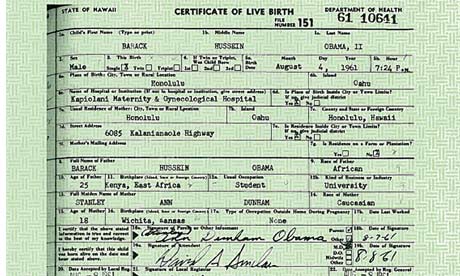
The following is the next lesson in a historical and faithful study beginning at 7:00 pm on Wednesdays. at the church of Christ in Carthage, Missouri, south of the Ford dealership PLEASE JOIN US! The Big Questions Our focus for this study hinges on answering these two big questions. The goal is to get closer to the answers each week in our class. How did we we get the Bible? Is the Bible accurate and dependable?  Birth - CertifiableIntroductory Questions: What kind of information do we find on a birth certificate? What does a birth certificate establish? Why is a birth certificate important?
That authentication is always a question that emerges for our English Bible as well. We want to know that what we are reading is what was intended by the Holy Spirit. We want to confirm that our driving Document is true and that we may trust its ability to lead. No one wants to be deceived. 
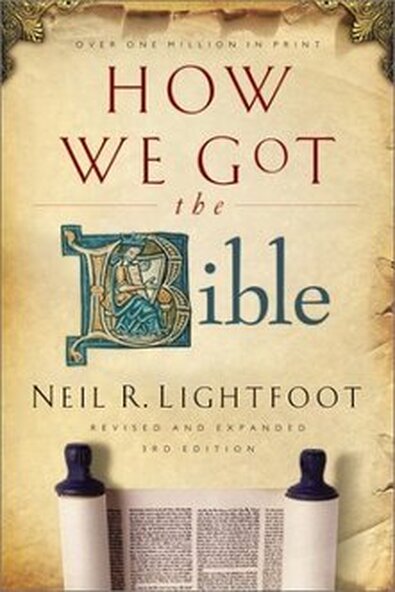
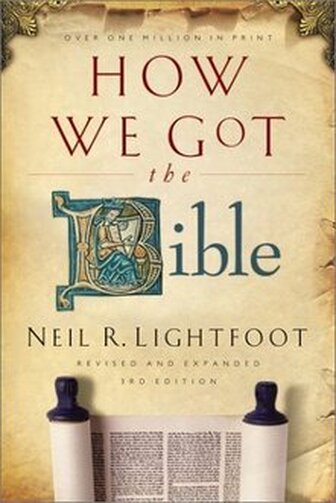
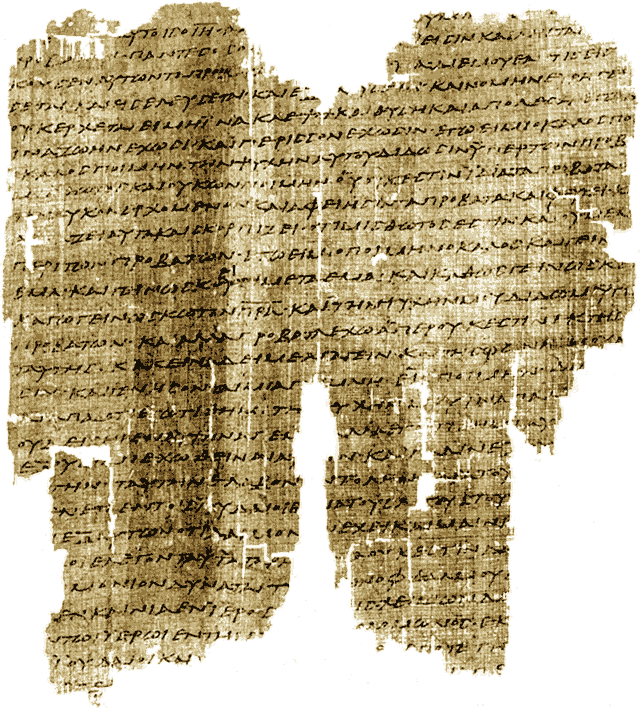
 The OriginalsOf course, we don't have the original texts of Scripture. Those writings were preserved in ancient times by various methods. The Book of the Law, for example, traveled inside the Ark of the Covenant (Deuteronomy 31:9, 24). The Old Testament grew gradually as inspired writers recorded history and prophecy. Incredibly, according to Lightfoot, "The Jewish authority, Josephus, sad that no book was added to the Hebrew Scriptures after the time of Malachi. The New Testament came about in much the same way, over a short period of time (AD 50-100). The letters, written by inspired men, were passed from church to church to be read in assemblies. More information about all of this is shared within the text of How We Got the Bible. The preservation of such is an incredible process. If the materials could not be protected and preserved, at least the words could be.  More from our Text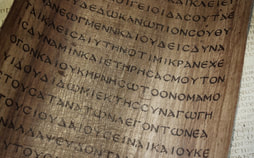 Our book has something to say about how our Bible is arranged and in what languages it is presented, mentioning that in regards to the Old Testament, the Hebrew Bible groups books differently than that with which we are accustomed, but the text is all the same:
Likewise, the New Testament is also grouped into three sections:
Refer to the book for more details. We heard samples of the three languages in which the original text was presented. Lightfoot has some things to say about those three languages on pages 27-29, providing more information about which sections are written in Hebrew, Aramaic, and Greek.  In Praise of the Scribes
Their notes, known as colophons, tell something about their work. Sometimes, the scribe would include his name, the location of his work, and the date. Lightfoot's book mentions a scribe telling of the completion of a manuscript and adding the commentary, "with great sweat and toil". Others, the book reports, exclaim, "The end of the book - thanks be to God!"
 Application Question How important is it? Is it important to you that the Bible comes from reliable sources, or is it just a collection of wise sayings and advice for living? Many atheists agree that there is wisdom in the teachings of Jesus Christ, but they do not believe that Jesus is a Messiah, that He performed miracles, that He walked out of His own grave, or that He prepares a place where His faithful disciples will be rewarded for eternity. We contend that the Bible and everything it contains is supported by:
So how important is it to you that the Bible can be proven true? Do you believe there is irrefutable evidence to its validity? Is proof something that strengthens your personal faith in the existence of God? Should faith alone be enough to drive you to drive you to your knees? Is "blind" faith a stronger kind of faith? If so, then why did God provide so much evidence? Go forward with us - or in this case, back to the beginning - as we continue our study next time.  A crack in the boat allows water in and eventually the boat sinks. It can be a slow process that people don't notice, but it can also allow enough water into the boat to cause people to panic and evacuate. In education, that leak seems to constantly cycle. We just can't seem to learn from our mistakes and misguided leadership in history, so we repeat the same issues and programs. Millions/ billions/trillions of dollars are spent to fix the problems, then millions/billions/trillions are spent to re-implement the same wolfy programs in new, shiny sheepy clothing.
Here is another few signs that we can observe right now. Let's emphasize this: these things are listed here as a warning that they could happen, but that they are occurring in the present.
It's a horrible shame to run teachers out of the system and then lament the fact that there is a shortage of teachers. Good grief! It's not hard to motivate this section of our society. They made the decision to teach, wanting to do their parts to benefit the community. Teachers don't want low test scores. Teachers don't want to defy their bosses. But they also want their students to experience the joy of being in their presence and improving their skills. Some teachers know how to do that for kids, and they should never be punished for doing it - even when it means that they are doing things that are different from the norm. Hold them accountable, but don't limit them.  Do we continue to drive nails into the hands and feet of Jesus Christ? Or are we celebrating the richness and fullness of living within His resurrection? One day, each of us will stand before Him in judgment. Will we, as the people in Acts 3:11, be full of amazement, or will we already know what Christ has done for us? Will we already believe in the power He holds? Will we have taken the steps to live in Him?
After healing the lame man, the apostle, Peter, addresses those people in Acts 3, asking, "Men of Israel, why do you marvel at this…?" He continues his response to the people, fundamentally convicting them of driving the very nails that were put into their Savior’s hands and feet. He says, "The God of Abraham, Isaac, and Jacob, the God of our fathers, has glorified His servant Jesus, the one whom you delivered up, and disowned in the presence of Pilate, when he had decided to release Him. But you disowned the Holy and Righteous One, and asked for a murderer to be granted to you, but put to death the Prince of life, the one whom God raised from the dead…" (emphasis added). I ask again, have our sins, our actions, and our thoughts convicted us? Because of our sins and unrighteous thoughts and actions, Christ’s burden on the cross is made even heavier. We are thankful to God Almighty for the sacrifice of His beloved Son! But we are also thankful for the resurrection of His Son! It is through His death, burial, and resurrection that we, too have hope of eternal life. In verse 19, Peter says, "Repent therefore and return, that your sins may be wiped away, in order that times of refreshing may come from the presence of the Lord…" In verse 38 of the previous chapter, Peter even better defined repentance as including more than simply becoming a good person. He says, "Repent, and let each of you be baptized in the name of Jesus Christ for the forgiveness of your sins…" If you have not taken these steps, or if you continue to drive nails into the cross, you stand convicted by Jesus Christ. "We need to learn to set our course by the stars, not by the lights of every passing ship."
(General Omar N. Bradley)
I visited these trails, this year, in between preaching the Sunday morning and Sunday evening services for the church in Washburn, Missouri. Eureka Springs, Arkansas, is only about a half-hour drive, so it makes for a terrific time-filling activity on a Sunday afternoon.
Of course, as mentioned, my goal was to find the tabernacle, and I finally did. No one was in or around the area, especially in the off-season, but the tabernacle is along one of the hiking trails, so I ventured inside. The measurements are right, although the materials, design, and construction of the facility is not accurate according to the descriptions given to Moses toward the end of the Old Testament book of Exodus. The items in the tabernacle walls might need some explanation for people who are not familiar with their descriptions in Exodus. For those of us who have studied, the things in the tabernacle are pretty much in the correct locations. It is interesting to see them in their positions and ready for reverent attention by the priests. Even the Holy of Holies is here, complete with the Ark of the Covenant. There is a dark window to look into this very special room into which only the high priest would be allowed to enter.
Because of a recent visit to Virginia, where I observed the making of bricks in the tradition of the early American Colonies, another plot of land also drew my attention. This was supposed to be a re-creation of the Israelite task of making bricks while they were enslaved in Egypt in the times of pharaohs. The layout of brick frames and clay bricks in this area was very similar to what I saw in Colonial Williamsburg, though the bricks here were much larger. This area on the Passion Play property is normally not open to the general public unless one has a ticket for their Holy Land tour. While it is accessible by walking the hilly miles-long trails, it is not something one normally just happens across. To me, it was a peaceful repose from the aerobic exercise of the hikes, but it still felt like I wasn't supposed to be there. Hiking up one more mild hill, I came to a gate across the paved road, and I worked my way around the gate to see the sign on the other side that announces that, unless ticketed, no one is supposed to go beyond that point. Obviously, the trails extend into that area, and the trails are free, so it wasn't as if I was trespassing, but it still felt a little naughty and adventurous to exit the trail in that manner.
Is it true that having two opposing teeth was a requirement to be a soldier in the Continental Army? It sure helps when ripping open the cartridge before plunging it into the barrel of a musket.



 On LocationHere are some photos of the Old Courthouse in St. Louis, Missouri, where Dred and Harriet Scott's original case was placed before the state's Supreme Court. Here, visitors can see the staircase that the Scotts climbed and the courtroom where their case was tried. 
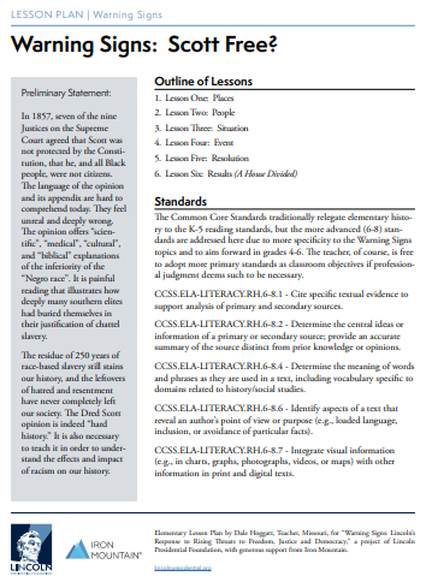
Originally Posted July 29, 2020  There may be some legitimate reasons for not teaching history in the elementary classroom. There are also some excuses for not teaching history. We'll address six that are commonly used. There's NOt Enough Time.It's true. There's not enough time if your priorities are dictated by schedules and textbooks...but if you're not seeing a need for civics education based on established history these days, you may not be paying attention. If ever we are to bring people to the table for conversation, we must teach students how to have conversations. They need to be taught how to listen, how to disagree amiably, and how to resolve conflict. Base this on actual history, show them how people have gotten it right in the past - and how they have gotten it wrong - and you will be performing a great service not only for your students, but for society around them. I Haven't Had Enough Content Training.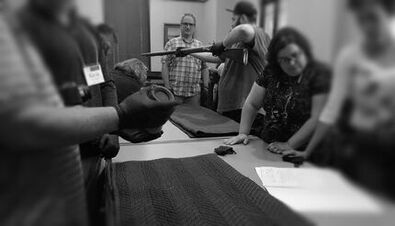 Teachers Learning History Hands-On This is true, as well, and that's the reason things are out of whack in our profession. We could call it generational historical ignorance, and it's a problem that education has set up for itself. When we don't teach it, no one learns it. When no one learns it, no one teaches it. That cycle is deadly. I suppose this is a primary, secondary, and post-secondary failure. Is it possible, at some point, to break the cycle? I'd say we need to teach some content to the teachers and teachers-to-be. We need to get people interested in the content. It's a shame that we have sacrificed patriotism, identity, and heritage in the name of ignorance, melancholy, and apathy. It Makes Me Uncomfortable.Some elementary teachers get into the profession because they like making cute bulletin boards, teaching cute kids, and creating cute, enjoyable activities. History breaks that mold, because (Say it together!), history is ugly, not cute. It includes murder, treason, war, abuse, infidelity, racism, and all kinds of negativity. Still, taught effectively, you will keep your students attention, at appropriate developmental levels. While teachers like cute things, they also should recognize that it's all about storytelling. Every good story has conflict, but not every story has a happy ending. Find the stories within your section of the social studies. Let your students marinate in some complicated thinking. Help them understand the overarching picture, develop their conclusions, and apply the skills you are teaching them. It's Too Controversial.It can be controversial - that's true - but that's not our fault. Teaching the facts of history does not mean that we are complicit in the actions of historical figures. The facts are the facts. Sometimes they implicate people, and sometimes they simply demonstrate the flaws in humanity. Life happens, resulting in good and evil consequences. Educators aren't always obliged to take sides, but to show the causes and effects of the choices made in the past. Please don't shy away from the controversial: that may just be the spice of the lesson. It may get an unlikely student to sit up and pay attention.
It's NOt Relevant to Kids.OK. This one is blatantly untrue. If you believe kids are bored by the subject, you haven't been in our classroom to see my students have mature conversations about some very serious subjects in colonial and American history. Sure, you can stick to the biased and bland presentation of a textbook (Blah.), but the magic happens when the teacher brings it to life. Many teachers would be surprised to see ten-year-olds longing for more of a subject that the teachers themselves are bored with. Please do not project your own dysfunction in history education onto your pupils.
Some Questions:
Let's Think: Zechariah probably doesn't get enough credit from us today. He is a devout priest for the Lord, and his service is important. Zechariah does not take his duties as priest lightly, and we have proof to back that up. Yes, he has just left the temple after having an impromptu meeting with a messenger of the Lord. He must be positively overwhelmed, but now he has to face people who are waiting for him on the outside. There's simply no other way for him: he can't sneak out, and he can't just sit tight and outwait the crowd. He must face them, and in his current state, being unable to talk due to his slip-up in the previous verses, his explanation about the angel has to be a difficult piece of information for the folks to digest. Is he being punished for something? The people must wonder if their devout and dedicated priest has done something to warrant heavenly consequences. He can only perform charades for them which must be frustrating for everyone involved. One word. Two syllables. Sounds like crangel? Still, the folks know that he has seen a vision. In fact, that vision was a real angel standing before him. It is not something that Zechariah imagines, and that's confirmed when what the angel says actually happens some time in the future. Important to note is that Zechariah doesn't just run home to wife Elizabeth to tell her the news. No, he still performs his priestly duties before he goes home, leaving me to wonder if someone else might have gotten to her first and spilled the beans. How much of the angel encounter did Zechariah share with the people anyway? It was awfully big news to keep bottled up. Some people find it hard to see addiction before it begins. Maybe they just don't believe it would ever happen to them. This video illustrates addiction from beginning to a possible end. Take five minutes to watch this video: Now for some questions:
For more discussions like this one, visit the Positive Behavior Conversations page.
"Now the serpent was more crafty than any beast of the field which the LORD God had made. And he said to the woman, 'Indeed, has God said, "You shall not eat from any tree of the garden"?' "And the woman said to the serpent, 'From the fruit of the trees of the garden we may eat; but from the fruit of the tree which is in the middle of the garden, God has said, "You shall not eat from it or touch it, lest you die."' "And the serpent said to the woman, 'You surely shall not die! For God knows that in the day you eat from it your eyes will be opened, and you will be like God, knowing good and evil.'" (Earth’s first deception: Genesis 3:1-5). 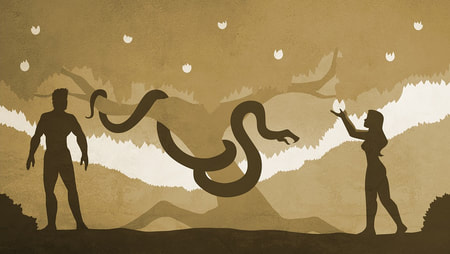 It’s interesting to note that Satan chooses a serpent to carry out his first deception. John the baptizer calls the Pharisees and Sadducees a brood of vipers in Matthew 3:7 and Luke 3:7.
Jesus repeats the term in Matthew 12:34, saying, "You brood of vipers, how can you, being evil, speak what is good? For the mouth speaks out of that which fills the heart." Satan chooses the form of a serpent. Cousins John and Jesus refers to the arrogant and hypocritical Jewish leaders as a brood of vipers. An easier term to understand would be sons of snakes. I’ll be the first to admit a healthy respect for snakes. Although I’m fascinated with their sleek movements and fascinating habits, I try to keep my distance when encountering one in the wild. I remember one such encounter when I was in middle school. Barefooted, I rounded the corner to our concrete back patio and almost stepped on a snake about three feet long. Going inside the house, I put on some shoes and got a rake from the garage. My objective was to move the snake out to the pasture. I knew the snake was not poisonous, but I had never seen one quite like it. Its turned-up nose had an unusual shape. When I approached the snake with my rake, it:
I finally succeeded in moving the snake to the pasture, not falling for any of its deceptive poses. My mother and I looked up the species and discovered it was a hog-nosed snake. Interestingly, the animal encyclopedia listed all the deceptions I had witnessed. My encounter with the snake had a happy ending. The snake lived and I learned. One difference between the hog-nosed snake and the brood of vipers was that the hog-nosed snake was non-poisonous. A viper can paralyze. A viper can blind a person. A viper can kill. The consequences of a misfortunate encounter with a viper are debilitating and deadly. Beware the false teachers and liars of the world! In Matthew 23:33, Jesus repeats the phrase again, describing to the scribes and Pharisees the consequences of their deception. He says, "You serpents, you brood of vipers, how shall you escape the sentence of hell?" It’s obvious that there are not only dire consequences to ones against whom a deception is being made; there are also horrific consequences for the ones who tell lies. Revelation 21:8 is a commonly quoted verse that explains that lying is just as much a sin as murder or homosexuality. To quote John’s writing in that verse: "But for the cowardly and unbelieving and abominable and murderers and immoral persons and sorcerers and idolaters and all liars, their part will be in the lake that burns with fire and brimstone, which is the second death." We often want to put sins in descending categories of severity, but God needs for us to understand this: that sin is sin, and all sin is serious and punishable by eternal existence in Hell. Our salvation is that we do not have to receive such a dire fate. We Christians choose not to lie and not to go to Hell. We Christians choose life in Heaven. The martyrs in John’s revelation are described in Revelation 14:5 as having "no lie found in their mouth; they are blameless." Won’t it be amazing to be described with those same words?  Many of my reflections might be repetitions of the actual reports that I have already made. If you missed any of those, you can always find them toward the bottom of my Colonial Williamsburg Teacher Institute page. If I hadn't already reported about them, I would have to reflect on my experiences at the capitol, where I really allowed myself to get into characters in interactive presentations of the Virginia General Assembly of the 1770s, including my portrayal of Patrick Henry and my own invented character of Edward Pigg. These experiences involved getting me unbridled, and I loved it! Getting fully into character and pouring everything into those roles was absolutely rewarding in ways that are perhaps indescribable.
I would also have to repeat my report about brickmaking and receiving a genuine brick fragment from our leader. The fact that the fragment is from Martha Washington's first husbands estate in Williamsburg astounds me, and I shall cherish it. For my final personal reflection on the institute, I'm going to go in a slightly different direction; in all of my previous reflections, I have referred to things I saw, experiences I had, or moments I shared with other human beings, but for this one, I want to relate something I brought with me. On the last day, our leaders offered a time for people to share their feelings and ideas with the group. It was a time when people said their goodbyes to the group and expressed their appreciation. One of my new friends shared that she was very blessed to have attended the institute with such gentlemen - men who held doors for the ladies and treated the ladies with respect in every way. I was one of four men in the group. In elementary schools, male teachers are always outnumbered by ladies. For my 32 years of experience teaching in public schools, I have always worked in a female-dominated setting. At any rate, for many years now, I have subscribed to old school values of chivalry and proper etiquette. I was certainly aware of my minority status and my traditional values while on this trip. I began at the beginning by being the man who opened the door and held it open for all of the ladies when we entered and exited buildings. At first they were surprised, then appreciative. One of my new friends expressed how appreciative that there was a gentleman at the institute. I made it a point to tell her that I was happy to serve as long as they would accept my traditional values. I continued in this, allowing the ladies to go through buffet lines first and the like, until I noticed one of the other men stepping up his game as well. I smiled to myself when he did, knowing that my influence had made a difference. He probably wasn't accustomed to taking such a conscious role in those kinds of acts, but I think he enjoyed the appreciation of the ladies, both younger and older. For me, right or wrong, I developed a sense of great satisfaction that I was being recognized for my chivalry, but perhaps even more so that I had a direct influence on another grown man. One does not always get to see his positive influence on other people, and I couldn't help but feel a bit of joy on multiple occasions during the week. So I loved when the "gentlemen" were recognized and applauded on that last day. It was wonderfully rewarded for just being myself. The following is a lesson in a historical and faithful study beginning at 7:00 pm on Wednesdays. at the church of Christ in Carthage, Missouri, south of the Ford dealership PLEASE JOIN US!
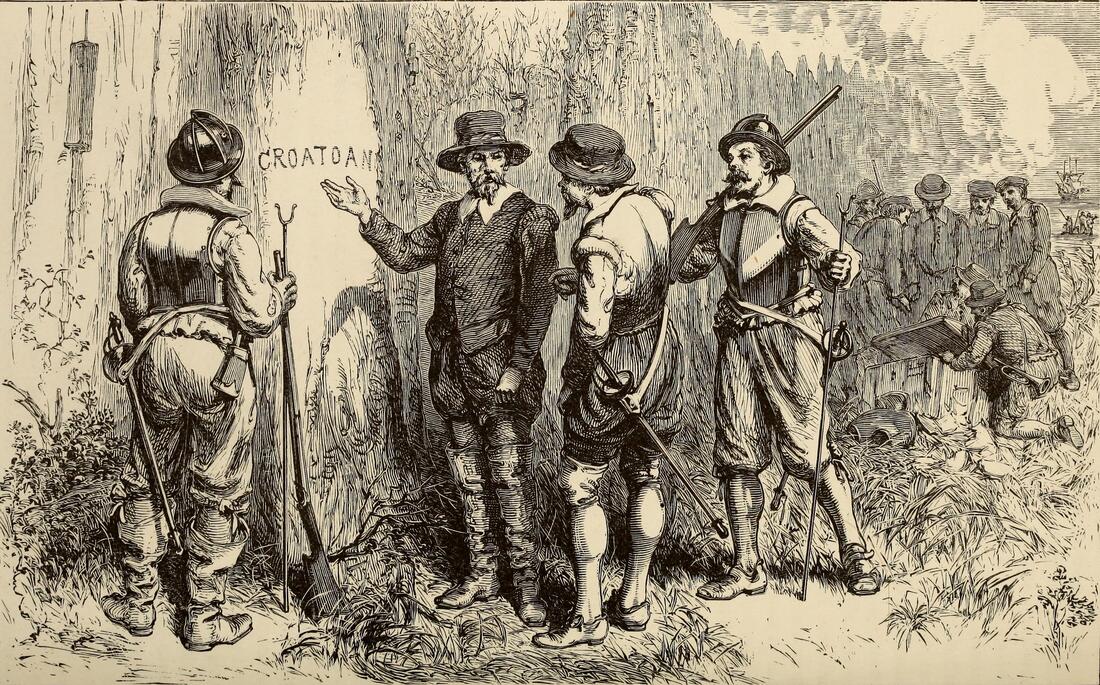
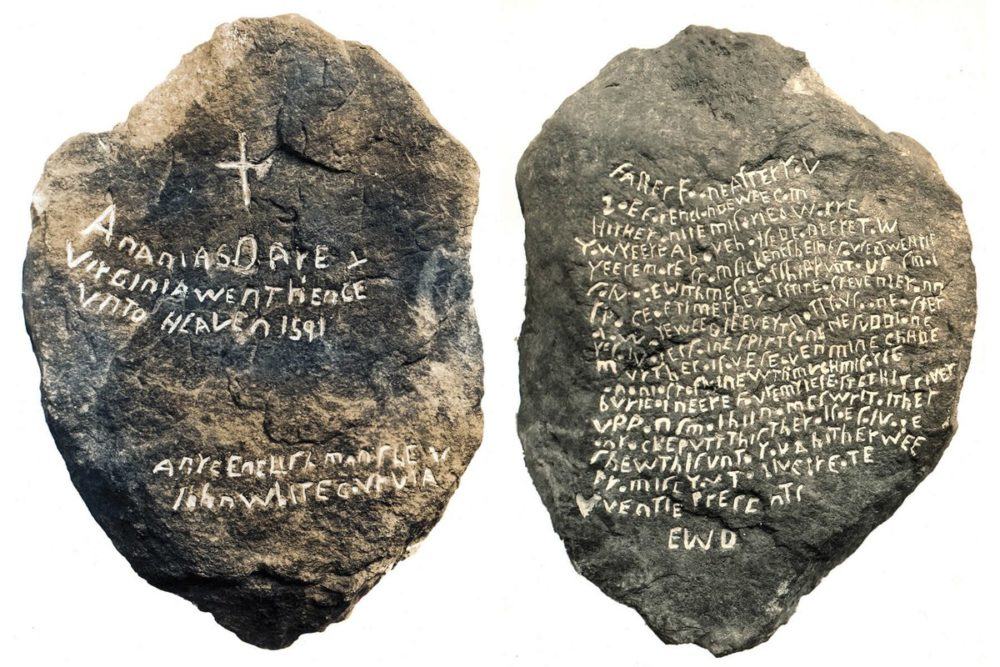
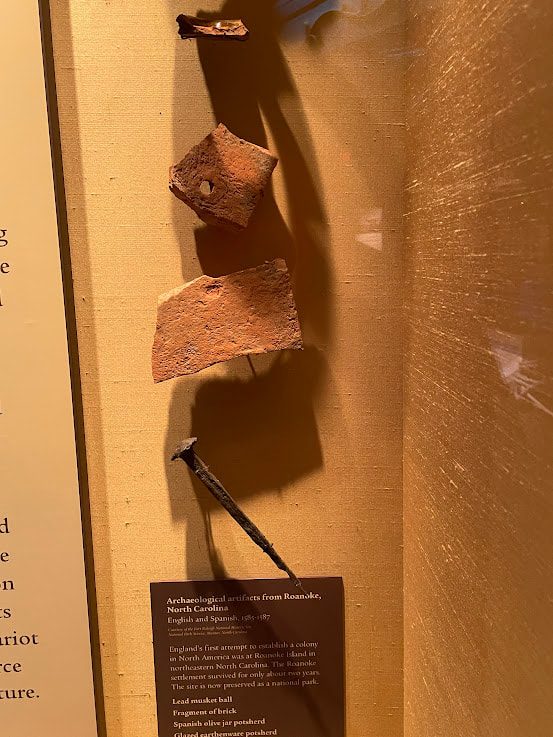
The famous – and, to some, infamous – Dare Stones have been a part of Brenau University lore since the late 1930s. It is a collection of a large number of engraved rocks that emerged at the height of the Great Depression purporting to solve the mystery of The Lost Colony of Roanoke, a group of settlers on an island off the coast of North Carolina that disappeared without a trace in the late 16th century. Although most of the stones are generally regarded as artifacts of artifice, the first remains of great interest to historians and archaeologists. It appears to be a message from one of the colonists, Eleanor White Dare, to her father, John White, the colony’s governor, who returned to America from a three-year trip to England to find his daughter, son-in-law and granddaughter missing along with all the others he had left at Roanoke.
 The Three R's

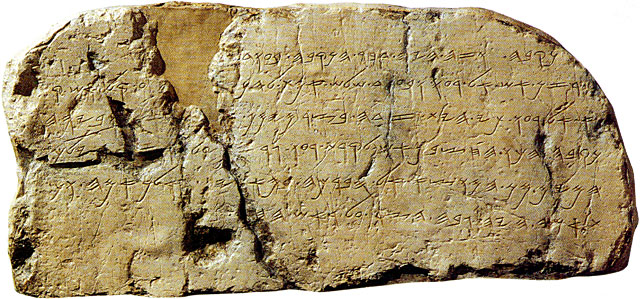
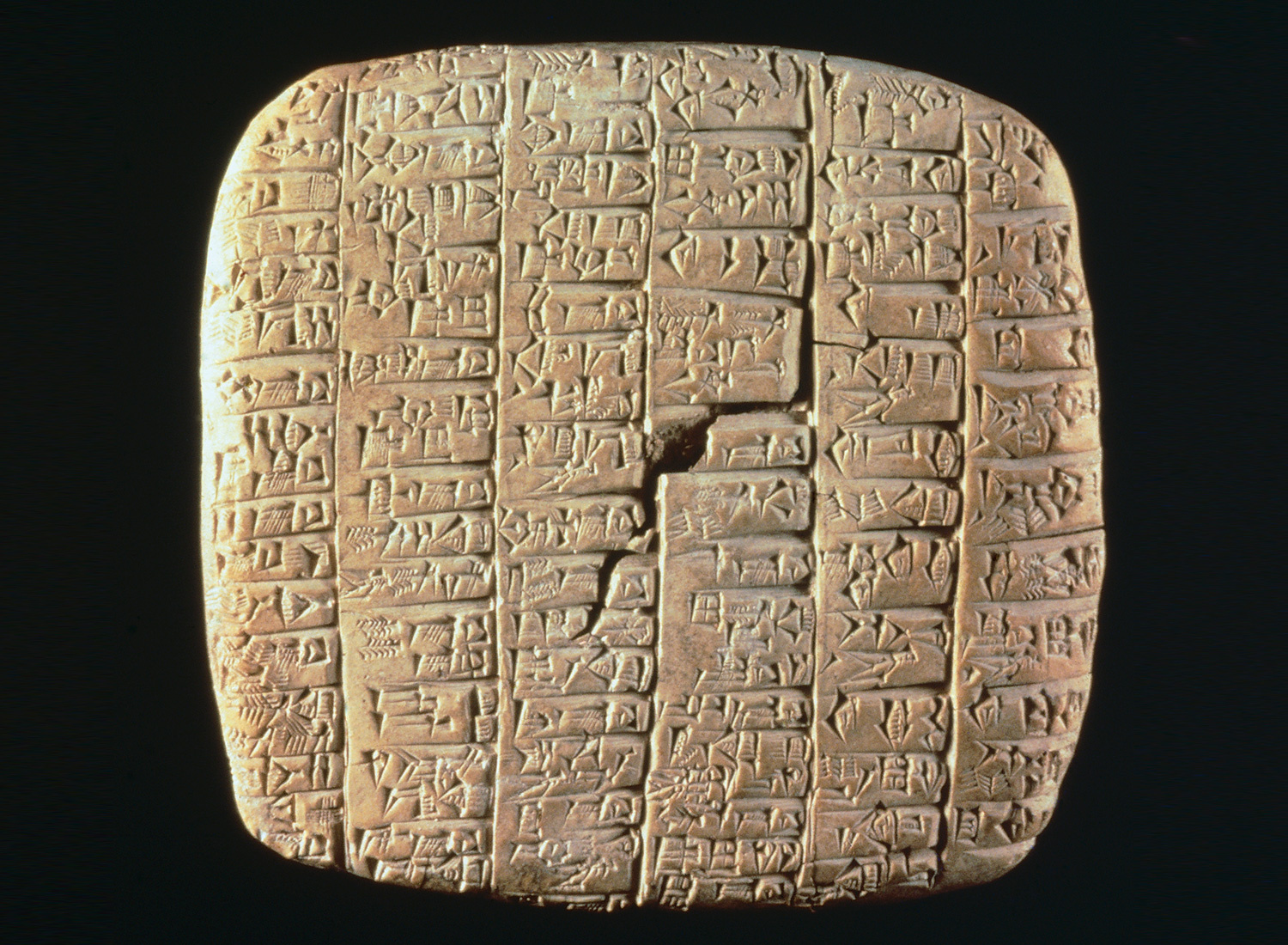
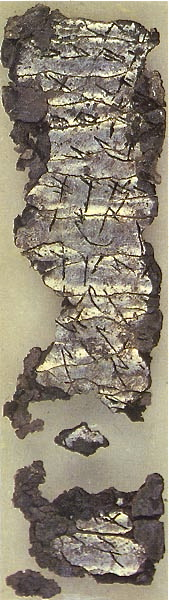
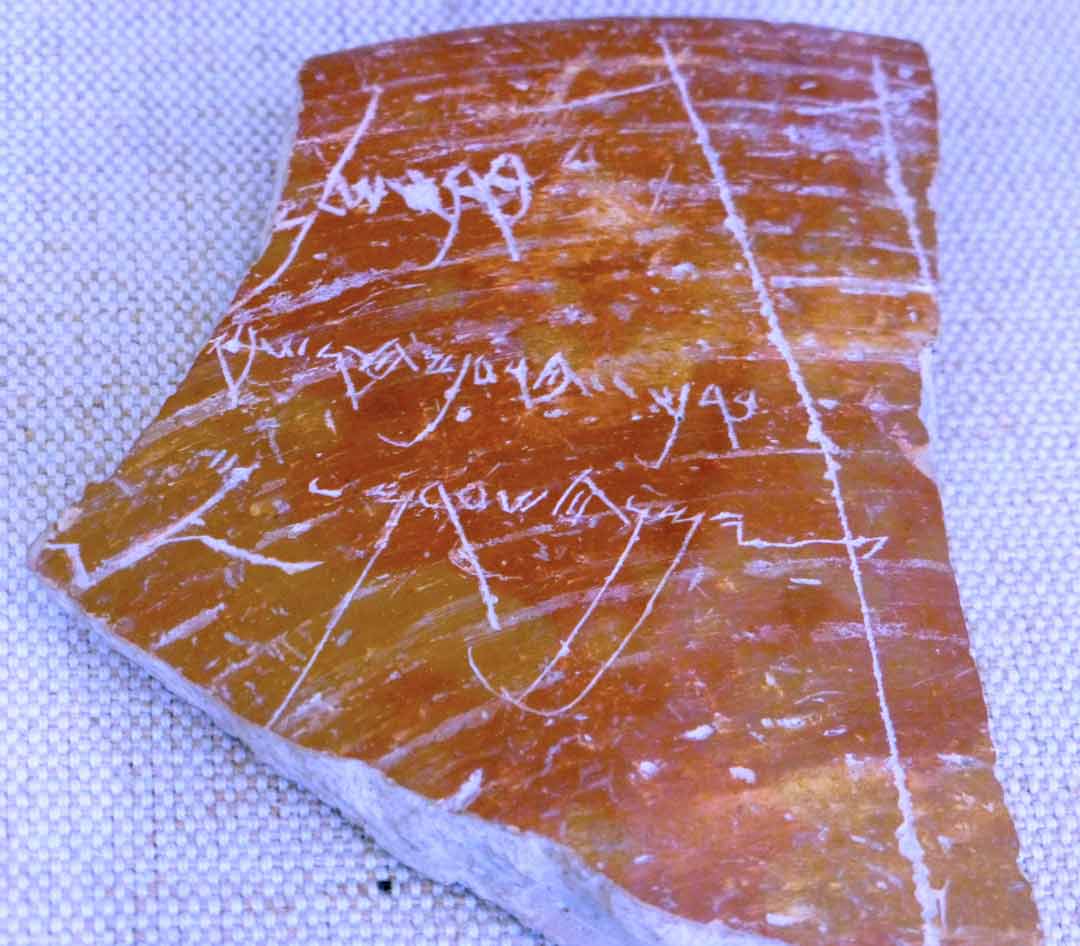
Media TimelineRemember this point from a couple of lessons back? Much of the archaeological evidence has been revealed in the past 50 years. Is it a coincidence that the tablets, cylinders, stelae, steps, engravings, relief carvings, and murals were done on materials that would withstand the passing of time AND that modern technology is just recently bringing these items into the light and confirming that they are authentic? Might the dual timing a part of the Providence of God at a time when people are more skeptical of faith and in need of more physical evidence? How do we go from stone to paper? Let's go to the book to review these points along a timeline. Stone



 Papyrus Job 8:11
Papyrus Vocabulary
 Leather and Parchment

 From Scroll to Codex
Books like Matthew, Luke, or Acts would be this long, requiring them to be contained in separate scrolls. The video (left) demonstrates similar scrolls (from the Old Testament) in use in the Jewish community. It is fairly easy for us to understand how a codex came about from this. To form a codex, sheets of papyri or parchment were stacked and stitched together on one side. These bound codices were more like our modern books. They are easier to carry, and more could be contained in one volume. Neil Lightfoot wrote, "It has been said that the inventor of the codex belongs with other nameless benefactors of mankind such as the inventor of the wheel and the devisor of the alphabet." Then, he also observed, "More and more it seems that the codex may very well be a Christian innovation. If not, we know at least that Christians were the first to make extensive use of the codex."  The Big Questions Our focus for this study hinges on answering these two big questions. The goal is to get closer to the answers each week in our class. How did we we get the Bible? Is the Bible accurate and dependable? Does God Communicate with Us Outside of the Bible? We contend that the Bible and everything it contains is supported by:
Application Question How important is it? Is it important to you that the Bible comes from reliable sources, or is it just a collection of wise sayings and advice for living? Many atheists agree that there is wisdom in the teachings of Jesus Christ, but they do not believe that Jesus is a Messiah, that He performed miracles, that He walked out of His own grave, or that He prepares a place where His faithful disciples will be rewarded for eternity. So how important is it to you that the Bible can be proven true? Do you believe there is irrefutable evidence to its validity? Is proof something that strengthens your personal faith in the existence of God? Should faith alone be enough to drive you to drive you to your knees? Is "blind" faith a stronger kind of faith? If so, then why did God provide so much evidence? Go forward with us - or in this case, back to the beginning - as we continue our study next time.  Mealtimes during the Colonial Williamsburg Teacher Institute were always different. I never knew where and with whom I would be sitting. In one of our last meals together, it worked out that I was at a table with all of the younger teachers. Strangely enough, it was an all new group for me, and I realized I was the elder in the situation.
This group was really talking about their plans for the new school year, and one in particular was lamenting the approach that her administration took in observations. It really sounded like an adversarial relationship between teachers and administrators, one in which everybody had to be on their toes and looking over their shoulders for the next shoe to drop. I related that to a time during my teaching career when I felt the same way. Even superintendents, curriculum advisors, and principals from other schools in the district would drop in unannounced to observe in classrooms. Not only this, but they would "quiz" random students about what they were learning and why. Not ever knowing what they were looking for, I didn't like trying to play their game soon decided to turn to the offense. I turned the tables. Instead of waiting for the bosses to attack my students, I sicced the students on the bosses. No longer would they wait to be asked what are you learning? or, why are you learning this? From that point on, they would be the first to speak. We practiced and practiced for the inevitable, and by the time an assistant superintendent came into the classroom, they were ready. As she approached a table, students stood to greet her. They shook her hand and with established eye contact, they asked her to have a seat. They asked, "Would you like to see what we're working on?" they asked. The AS was shocked beyond belief. Before she left the school building, she spoke to the principal about what she had just witnessed in Room 404. Not only was this a good offensive strategy for alleviating the stress of unwanted and overbearing observations, but it was what was best for the students. The skills they learned in this project are valuable skills that they could use in regular life. These were grown-up skills that emphasized conversation and professional talents. The younger teachers at CWTI appeared to love the idea of going on offense, and they looked forward to using it in their own classrooms in the fall. It was an unexpected moment when we could relate to each other outside of the history of the area. I loved that they were so receptive to my suggestions.
Some questions:
Let's Think: Because of his unbelief, Zechariah will be mute for a little while. That must have been a real blow to this priest. He's going to have some to think about the time when an angel of the Lord spoke to him directly and yet he did not believe what the angel said. In spite of Zechariah's unbelief, however, the angel says God's plan will go as intended. Nothing takes away God's ability to work. Not only was Zechariah lacking faith in what Gabriel told him, but he seems to be making excuses. Does he or does he not want to have a son? He has asked for one, but now that the baby is coming, Zechariah seems to be rescinding his request. Is he really ready, at his age, to raise a child? Is his wife ready for that as well? In many cases, especially in the Old Testament, the angel of the Lord is listed just like that - the angel of the Lord - but in this account the angel is identified by name - Gabriel. We think that the original text often indicates that the angel of the Lord in the Old Testament could be Jesus Himself (which changes how we view those texts). Zechariah does not have a line-of-sight on the Messiah, but he still has one of those eye-opening experiences that just makes you want to shout to the world. (Oh yeah, he can't talk.) |
AnthemThe Hoggatteer Revolution
is an extensive, award-winning, inimitable, digital platform for Encouraging and Developing Education, American History, and Honest Christianity in the beautiful, friendly LAND OF THE FREE AND THE HOME OF THE BRAVE. This site is described as
"a fantastic site... chockablock full of interesting ideas, hilarious anecdotes, and useful resources." 


...to like, bookmark, pin,
post, and share about the site... and check in regularly for new material, posted, usually, before DAWN'S EARLY LIGHT! 
Passing Notes

Trophy Case
Pulpit Minister, since 2025

Student Teacher Supervisor, since 2022
Master Teacher, since 2021

TRAILS, since 2025; EXCEL, 2025; APEX, 2026

Recruited Lincoln Presidential Foundation Curriculum Writer, 2022

Retiree, 32 years serving Joplin and Oklahoma City Schools, 2022

Selected Participant for 2020-2022

Selected Honoree/Celebrant, 2022

Outstanding Achievement, 2022

Classroom Grant, 2018-2022

2021 Missouri History Teacher of the Year and National History Teacher of the Year Nominee

Recognized in Joplin Globe, February 2021

Teacher Institute Participant, 2019

Summer Residency Participant, 2018

"The Bus Stops Here" Grant, November 2018

Summer Residency, 2018

Recognized 2017
Since 2017

MSTA Media Award, KOAM-TV's
"Manners Matter", Featuring Our Class, May 2017

Third Place, 2016 Film Festival

Recognized 2016

Slide Certified, 2012

2009 Outstanding Class Website

2005 Nominee

2005 Joplin Teacher of the Year and Missouri Teacher of the Year nominee

2004 Recipient

2002 Excellent Education Program

2001 Nominee

1996 Outstanding Classroom Video of the Year

Grant Recipient, 1993

Intercom Book Mr. Hoggatt Securely
for Your Event at GigSalad.com. 
Fireside Chats
Choose Your Platform:
Anchor Apple Podcasts (iTunes) Breaker Google Podcasts Overcast Pocket Casts RadioPublic Spotify Stitcher 
Archives
October 2026

Checks & BalancesLinks to external sites
on the internet are for convenience only. No endorsement or approval of any content, products, or services is intended. Opinions on sites are not necessarily shared by Mr. Hoggatt (In fact, sometimes Mr. Hoggatt doesn't agree with anyone.) 
|
||||||||||||||||||||||||||||||||||||||||||||||||||||||||||||||||||||||||||||||||||||||||||||||||||||||||||||||||||
|
|

|
Washington |

|
|